
William Bradford
BAPTIZED: March 19, 1590 at Austerfield, Yorkshire, England
DIED: May 9, 1657 at Plymouth
“Our right trusty and well beloved William Bradford”
– Plymouth Colony Records, 1639
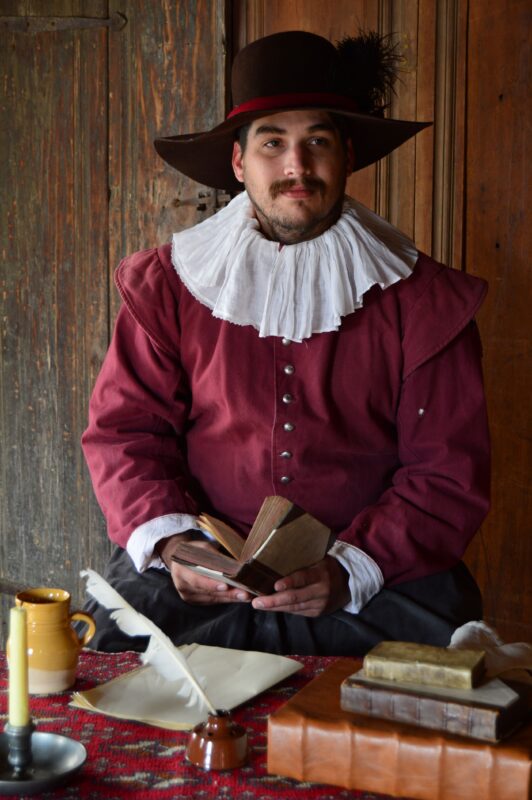 Raised to be an English farmer in rural Yorkshire, William Bradford’s life changed when he was orphaned as a child. He turned to bible study and books; by age 12, he was connecting with religious reformers and walking miles to hear preachers like Richard Clyfton. Young Bradford established friendships with godly, educated men like William Brewster and John Robinson, who became his mentors.
Bradford joined the Separatist church, which was illegal. At age 18, he left for the Netherlands and settled with the congregation in Leiden. He worked as a weaver, married Dorothy May, another English religious exile, and started a family. Despite a rewarding spiritual life, poverty took a toll. In 1620, the Bradfords left their young son behind to embark on the perilous journey to America.
In April 1621, William Bradford was elected Governor of Plymouth Colony. The Colony was on the verge of starvation and had lost half its people, including Bradford’s own wife, who had drowned off Cape Cod.
Governor Bradford guided the Colony’s efforts to grow crops, set up a new government, and address their debts to investors. He recognized that alliance with the Wampanoag was crucial to their survival, and at times delegated Native diplomacy to others better suited to it. In 1623, Bradford married his second wife Alice Southworth, inviting Ousamequin and his entourage as guests of state.
In 1627, Bradford was part of a group that took on the Colony’s debts in exchange for fishing and trading rights. Establishing trading posts on Cape Cod, the Kennebec River, and the Connecticut River, they faced competition from other colonial interests. It took years to pay off what was owed.
Bradford, vigilant against those who might disrupt the unity of his congregation or Plymouth’s civil authority, was capable of harsh measures. In 1628, he deported Thomas Morton of Mount Wollaston Colony. By the 1630s, people had begun to move out of New Plymouth as lands were apportioned farther away. Bradford desired to keep the community together but could not stop the trend, to his heartfelt regret.