Mary Chilton (Winslow)
BORN: 1607/Sandwich, Kent, England
DIED: Between 1676 and 1679/Boston
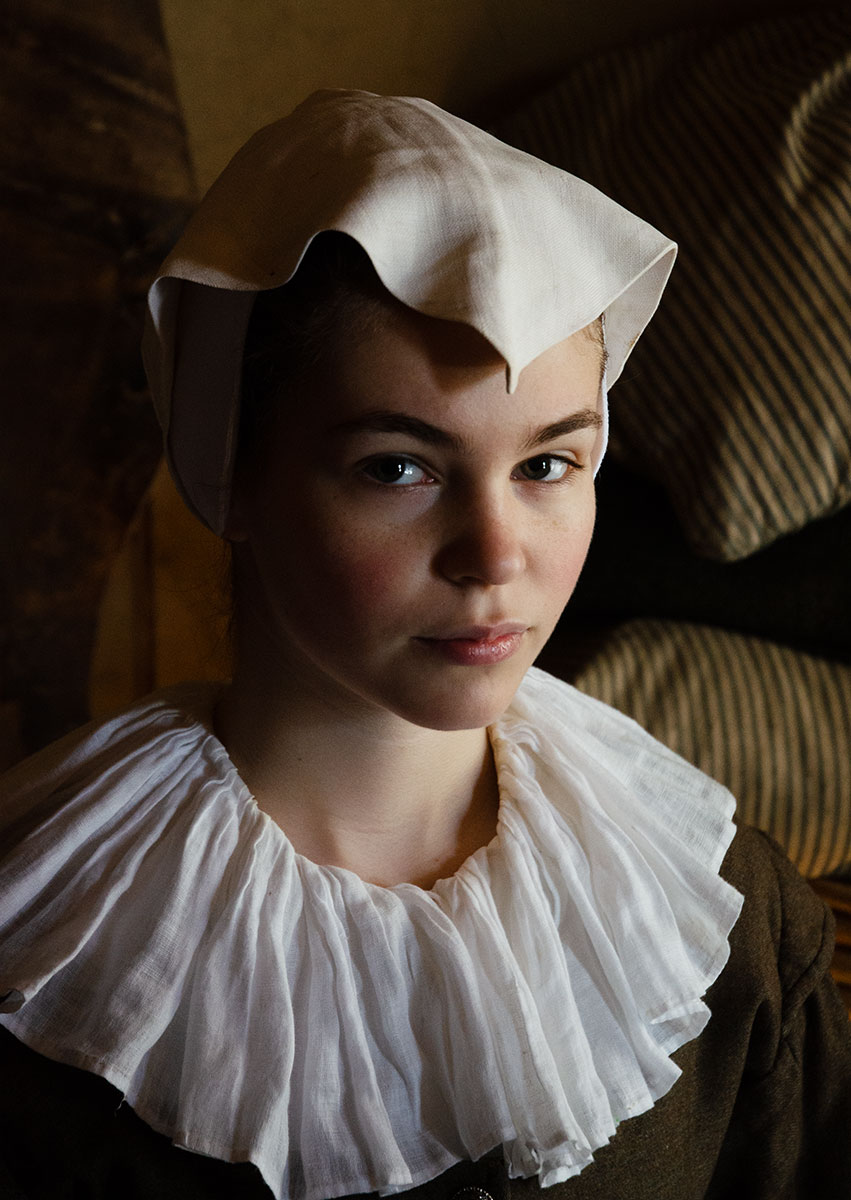
Thirteen-year-old Mary Chilton made the Mayflower voyage with her father James, at 64 the oldest passenger, and her mother, whose name is unknown. The Chiltons left England to join the Leiden Separatist community after Mary’s mother was excommunicated for attending a funeral held outside the Church of England to avoid its rituals.
Mary spent most of her childhood in Leiden. As exiles and immigrants, the Chiltons faced poverty and hardship. The family’s decision to move to America may have been influenced by an attack on Mary’s father and older sister Isabella in 1619 by an anti-Arminian mob, during which James Chilton was seriously injured.
James Chilton died while the Mayflower was anchored in Provincetown, and Mary’s mother died a few weeks later. It is not known who the orphaned Mary went to live with. In 1623 she received land as part of the Plymouth Land Division, and by 1626 she had married John Winslow. Winslow, ten years her senior, was the brother of Mayflower passengers Edward and Gilbert Winslow and had arrived on the 1621 Fortune. It is believed that Mary’s older married sister Isabella Chilton Chandler joined her in Plymouth by 1630.
Mary and John Winslow had ten children together. Mary was 46 when her last child, Benjamin, was born in 1653. The family later moved to Boston. In 1671, the Winslow’s church membership was officially transferred from Plymouth to Boston’s Third Church. The couple bought a “mansion house” as their new home for the huge sum of 500 pounds.
When John died in 1674, he was one of Boston’s wealthiest inhabitants, having made a fortune from trade with the West Indies, whose economy depended on slave labor. John’s will mentions a “Negro Girle Jane,” whom he decreed should serve Mary and remain in bondage another twenty years before being freed. With her inheritance of the enslaved Jane, Mary Chilton Winslow became one of at least three Mayflower passengers who became owners of an enslaved person at some point in their lives following their arrival in New England; see also Isaac Allerton and Richard More.
In 1676, when Mary Winslow was “weake of Body but of Sound and perfect memory,” she made a will, signing it with her “mark.” In the document, she bequeathed to female relatives gifts of money, clothing, furniture, and silver.