
Isaac Allerton
BORN: 1586-88, [probably East Bergholt, Suffolk, England]
DIED: 1659, New Haven, Connecticut
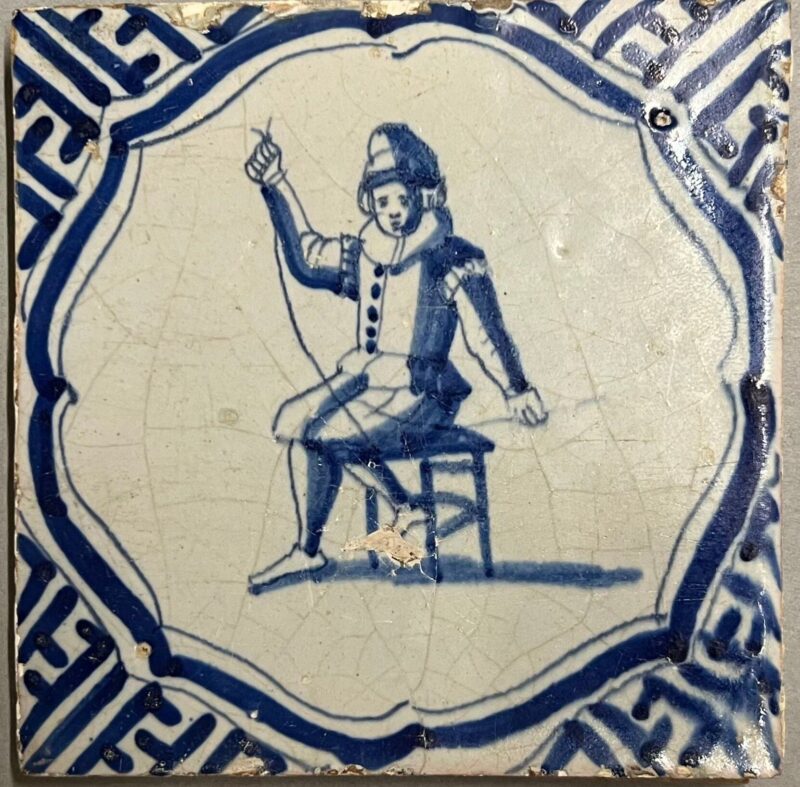 Isaac Allerton was probably born in East Bergholt, Suffolk where he was a member of an early Separatist congregation. The young Isacc appears to have been apprenticed as a blacksmith in London until breaking his contract in 1611 to join the Separatists in Leiden. There he married English exile Mary Norris and worked as a tailor, which had been his father’s profession. In 1619, he was successful enough to take on an apprentice, John Hooke.
Connected through marriage and family ties, Allerton was influential among Leiden’s English exiles and involved in the arrangements to establish a colony. He traveled on the Mayflower with his wife and three young children, Bartholomew (7), Remember (5), and Mary (3). Mrs. Allerton died in February 1620/21 after giving birth to their stillborn child at Plymouth two months earlier.
After arriving in New Plymouth, Allerton was elected assistant to Governor Bradford in 1621 and continued in that role for a decade. He became an important agent for the Colony, returning to England frequently to deal with investors and purchase supplies.
About 1625, Allerton married Fear Brewster, daughter of William Brewster, the Colony’s respected church elder, becoming part of Plymouth’s core leadership circle. Returning to London, he re-negotiated their contract with investors in late 1626 and became one of eight “undertakers” of the Colony’s debts in exchange for trade monopolies. Governor Bradford noted Allerton’s “good and faithful service,” but became disillusioned when Allerton began investing in his own mercantile affairs while on Colony business. By 1631, Allerton was discharged as Plymouth’s agent.
After his wife Fear’s death in 1634, Allerton moved to New Haven Colony in Connecticut and married for a third time (likely to Joanna Swinnerton). He developed an ambitious transatlantic and intercolonial network, from Connecticut and Massachusetts Bay to New Netherlands, New Sweden, Virginia, and Barbados. By the 1640s, Allerton was trading with the Dutch West India Company with a grand home and warehouse in New Amsterdam. In 1644, he helped petition Dutch authorities for the colony’s self-governance. A decade later, he was supplying trade goods to settlers at New Sweden but suffered losses when the Dutch seized the colony.
In 1658, Allerton returned to New Haven and died the following year at age 73, leaving a complex estate that reflected his far-ranging role in early colonial settlement and trade.