Religion & Worship
The road to “Separatism” began with the Reformation. In 1532, King Henry VIII declared the English church independent of the pope. His successors introduced further religious reforms.
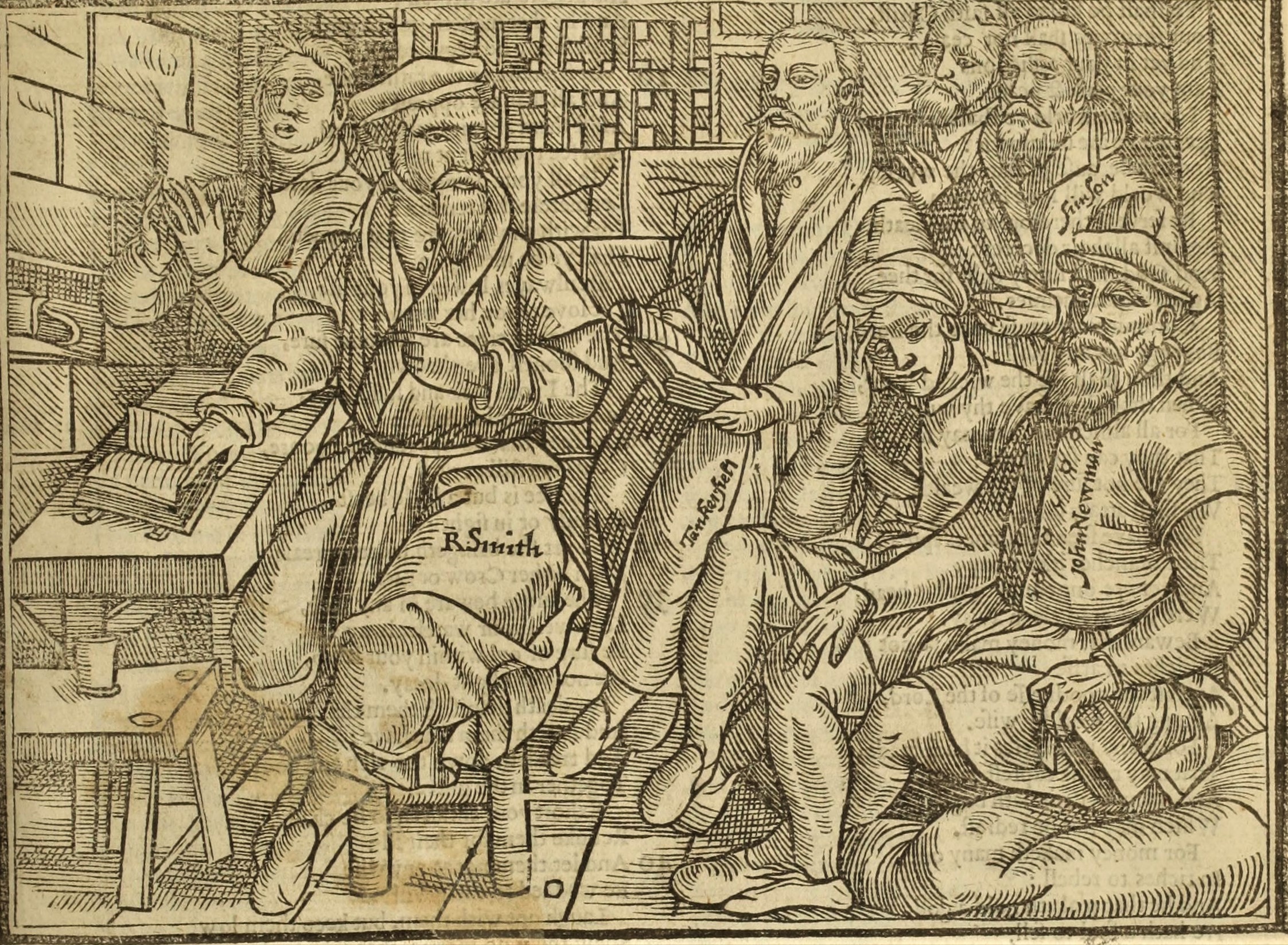
Later in the 16th century, some Englishmen believed more reforms were needed to “purify” the church. Among the more radical of these “Puritans” were the Separatists, who formed congregations entirely apart from the English church. They found inspiration in models of worship from the early Christian church and were willing to risk the consequences of abandoning the state church.
“[They] as ye Lords free people joyned them selves… in ye fellowship of ye gospell, to walk in all his wayes made known, or to be made known unto them.”
– William Bradford, Of Plymouth Plantation
The translation of the Bible into English had a profound influence on religious thought. It allowed ordinary people access to Scriptural texts without the mediation of learned clergy. This contributed to the polarization of religious belief.
The Pilgrim Separatists used the “Geneva Bible.” This was a translation (with commentary notes in the margin) made by English Calvinist refugees living in Switzerland, first published in 1560.
The 1592 Geneva Bible that belonged to Pilgrim William Bradford is permanently displayed at Pilgrim Hall Museum. This bible journeyed with Bradford from England to Holland and eventually to Plymouth.
The official English church strongly disagreed with the Geneva Bible’s commentary. King James authorized a new translation. The first “King James Bible” was published in 1611.
Pilgrim Hall Museum also owns a King James Bible, printed in 1620 shortly before the Mayflower sailed. It belonged to John Alden. Alden was not originally a Separatist but was hired as a cooper to accompany the Mayflower voyage; rather than return to England, he chose to remain and join the colony.
William Bradford described the religious divisiveness in England during his childhood and the Separatist beliefs he came to embrace.
“The one side [the Reformers] laboured to have ye right worship of God & discipline of Christ established in ye church, according to ye simplicitie of ye gospell, without the mixture of mens inventions, and to have & to be ruled by ye laws of Gods word, dispensed in those offices, & by those officers of Pastors, Teachers, & Elders, &c. according to ye Scripturs. The other partie [the Church of England], though under many colours & pretences, endevored to have ye episcopall dignitie (affter ye popish maner) with their large power & jurisdiction still retained; with all those courts, cannons, & ceremonies, togeather with all such livings, revenues, & subordinate officers, with other such means as formerly upheld their antichristian greatnes, and enabled them with lordly & tyranous power to persecute ye poore servants of God.”
– William Bradford, Of Plymouth Plantation
One group of Separatist reformers was centered in Scrooby at the home of William Brewster. Brewster was born around 1566 in or near Scrooby, Nottinghamshire. When Brewster was a child, his father was appointed bailiff of Scrooby Manor and later became royal postmaster.
After a brief time of study at Peterhouse College, Cambridge in 1580, Brewster served in Queen Elizabeth’s diplomatic service as a secretary to William Davison, including in the Netherlands and in London. When Davison fell out of favor and lost his position in the aftermath of Mary, Queen of Scots’ execution, Brewster returned home to Scrooby and became postmaster following his father’s death in 1590.
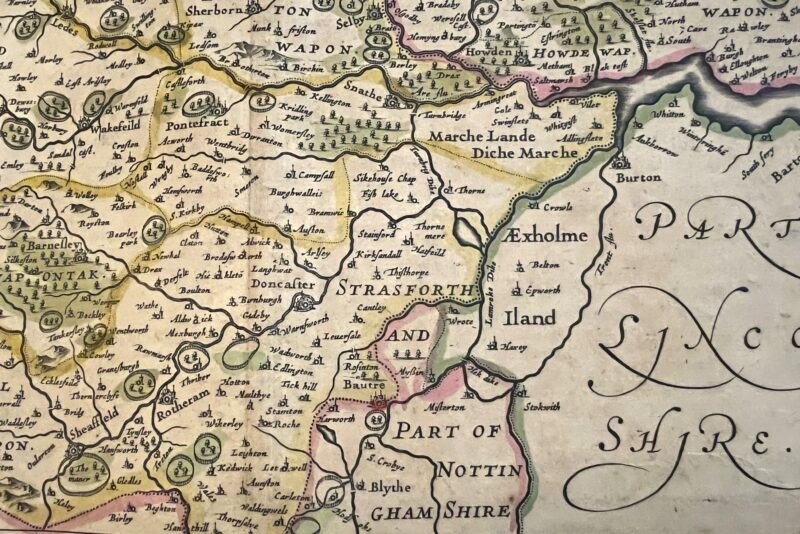
Brewster began traveling to nearby villages to hear the sermons of religious reformers. The Separatist congregation that became the nucleus of the Pilgrims gathered at Brewster’s home for prayer and spiritual discussion. John Robinson, a Cambridge-educated minister from the Nottinghamshire village of Sturton-le-Steeple, became the group’s pastor. The small group of reformers covenanted together to form their own separate church, independent from the Church of England.
The English Crown forbade separation from the Church, persecuting and imprisoning many. In 1608, the Scrooby group fled into more liberal Holland, despite King James’ efforts to prevent their departure.
After the move to Holland, where he worked in the cloth trade and as a printer, Brewster became the congregation’s Elder.
While Robinson stayed with the community in Holland, Brewster sailed with his wife Mary and their two youngest children on the Mayflower. He became, in the absence of an ordained minister, the much-respected religious leader of Plymouth Colony.
Our reved Elder hath laboured diligently in dispencing the word of God unto us, before he came; and since, hath taken equalle pains with him selfe, in preaching the same.
– William Bradford, Of Plymouth Plantation
Brewster died in 1644. His inventory of several hundred books in English and Latin attests to his love of learning and his spirituality.