
Mayflower Pilgrims
“They knew they were pilgrims, and looked not much on those things, but lifted up their eyes to ye heavens, their dearest countrie.”
— William Bradford, Of Plymouth Plantation
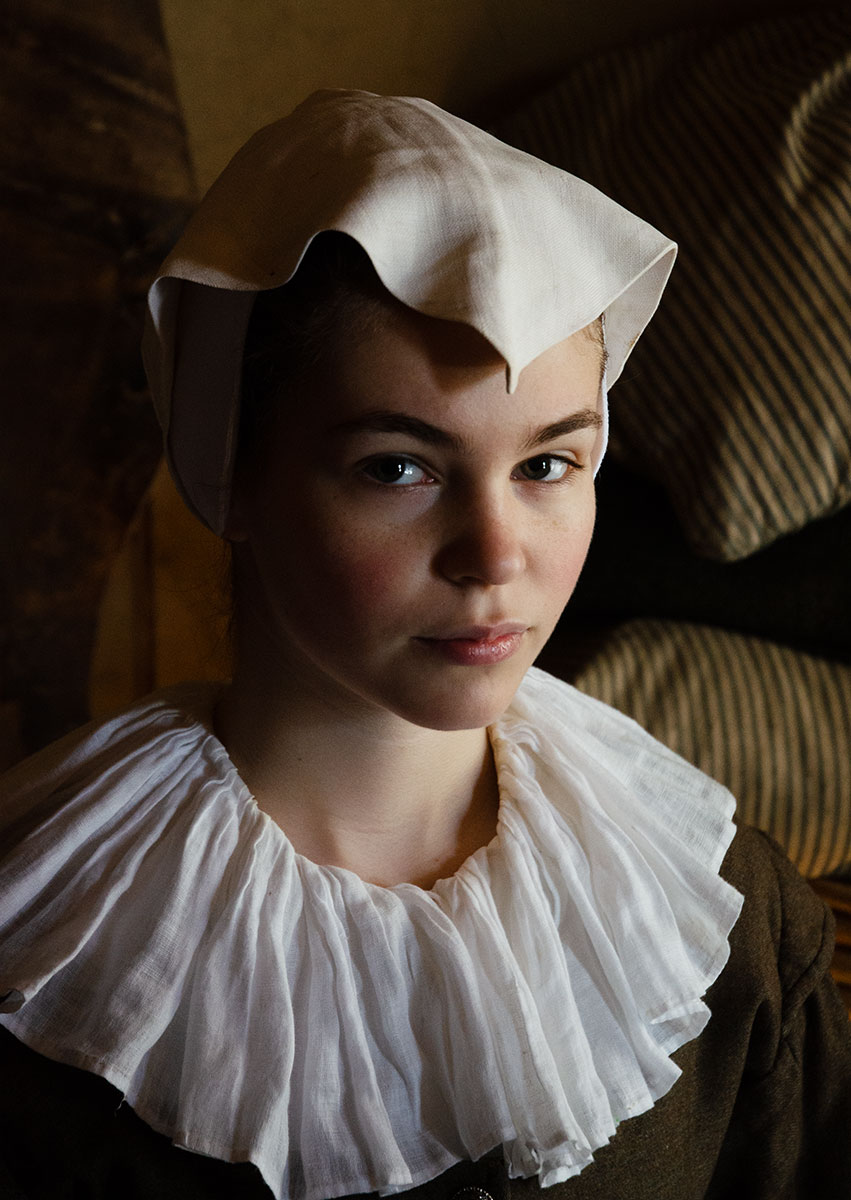
The Pilgrim saga began with a group of religious dissidents who believed it was necessary to separate from the Church of England. Persecuted in England, these “Separatists” moved to Holland in 1607/1608.
The group, joined by other colonists recruited by the venture’s financial backers, began the move to America in 1620. 102 passengers left England on the Mayflower. One baby was born during the ocean voyage and a second was born while the ship was off the coast of Cape Cod, bringing the total number of settlers to 104.
Many families—Separatists, non-Separatists, and Separatist sympathizers—traveled to America in several ships in the 1620s. Early Plymouth records refer to all passengers from the first four ships as “First Comers.” These ships were the Mayflower (1620), the Fortune (1621), the Anne (1623), and the Little James (1623).
The term “Pilgrim” for the Plymouth colonists was not generally used until the early 1800s, although “pilgrim” was often used to refer to someone on a spiritual journey.
The 17th-century Pilgrims are known through the writings and artifacts they left behind. There is much more to their history, however, than the 17th-century facts. There is also the “Pilgrim Story“: the celebration of a few selected moments which have fixed the Pilgrims firmly in America’s collective memory.
This Pilgrim Story has grown and evolved over time. As each succeeding generation looked to the past for inspiration and guidance, certain key elements of the 17th-century Pilgrims were emphasized. The attention focused on these key elements has sometimes obscured other parts of the Pilgrim Story, changing the perception of the Pilgrim experience. Often, these later interpretations of the 17th-century Pilgrims tell us less about the Pilgrims than about the emotional and political needs of the era in which the interpretations were created.